Selected publications
Pre-prints
(*: equal contribution)
Visual search, driven by bottom-up and top-down processes, offers a unique framework for investigating decision-making. This study examines individuals’ awareness of their own visual search by combining computational modeling with behavioral experiments. Fifty-seven participants performed a classical visual search task in which the goal was to find an object in a natural scene. Crucially, in some trials, the search was interrupted by clearing the screen before the gaze reached the target object. Participants had to report their best guess of the target’s location and the uncertainty on their response. We show that a modified version of the Entropy-Limit Minimization (ELM) model captures scanpaths and perceived target locations, while also revealing that uncertainty is influenced by scanpath length, the distance between the perceived and true target location, and the entropy of decision maps. These findings highlight the model’s capacity to reflect cognitive processes underlying response selection and uncertainty judgment.
Publications
(*: equal contribution)
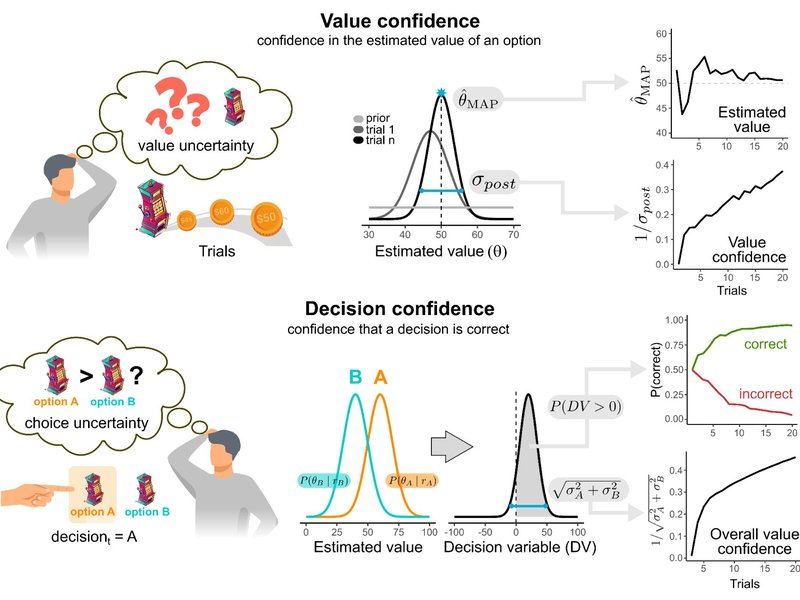
Confidence, the “feeling of knowing” that accompanies every cognitive process, plays a critical role in human reinforcement learning; yet its computational bases in learning scenarios have only recently begun to be studied. Prior work has distinguished between value confidence (certainty in value estimates) and decision confidence (certainty that a choice is correct), but how these two forms of confidence are computed and interact has not been directly tested. Here we combine two experiments and previously published datasets to test competing computational hypotheses. We find that value confidence is best explained by a Bayesian computation reflecting the precision of value estimates, and that it adaptively guides behaviour by reducing exploration and promoting exploitation as certainty increases. In contrast, decision confidence departs from Bayesian predictions, especially on errors. A hybrid model integrating the Bayesian probability of being correct with the overall value confidence better accounts for decision confidence. Moreover, individual differences in the relative weighting of these two information sources explain variation in confidence reports and predict both task performance and metacognitive accuracy: subjects whose confidence judgments more closely track Bayesian computations perform better. Together, these results provide a unified computational mechanism through which distinct forms of confidence shape learning and choices in uncertain environments.
In a recent study, Goueytes and colleagues combined computational modeling with intracranial recordings to dissect the neural basis of confidence and changes of mind. They reveal a temporally organized, spatially distributed hierarchy of evidence accumulation, with pre-decisional signals in the pre-supplementary motor area (preSMA) and post-decisional signals in the insula. This reframes metacognition as a distributed and dynamic process.
Theories of consciousness have a long and controversial history. One well-known proposal — integrated information theory — has recently been labeled as ‘pseudoscience’, which has caused a heated open debate. Here we discuss the case and argue that the theory is indeed unscientific because its core claims are untestable even in principle.
The Somatic Marker Hypothesis (SHM) proposes that human decision-making under uncertainty is advantageously guided by affective signals before developing awareness of which courses of action are better. However, this claim has been questioned due to the limitations of the methods used to measure awareness, with alternative measures yielding conflicting results. To address this issue, we apply metacognitive sensitivity, a reliable method based on confidence ratings that outperform previous awareness measures, in an online nonclinical sample (N = 44) to assess awareness in the Iowa Gambling Task (IGT). Using this approach, we found that awareness and advantageous decision-making are not independent processes; an increase in metacognitive sensitivity strongly predicted an improvement in task performance in nearly all blocks of the task. A lab-based preregistered replication (N = 47) confirmed these findings. Interestingly, some participants demonstrated awareness without advantageous decision-making, suggesting that awareness is a necessary—but not sufficient—condition for optimal performance. Overall, this study highlights the challenges of measuring awareness in the IGT and introduces a novel alternative method that questions a key postulate of the SMH.
Inequity aversion, which can be categorized into disadvantageous inequity aversion and advantageous inequity aversion, does not develop in the same way across different societies and cultures. In the current study, we evaluated inequity aversion using the “inequity game” among Argentine children from two different populations: a low socioeconomic status (SES) group (n = 168) and a middle socioeconomic status group (n = 129). Middle-SES children showed stronger signs of disadvantageous inequity aversion and showed signs from an earlier age than low-SES children, but neither group showed advantageous inequity aversion. On the other hand, girls tended to manifest greater levels of advantageous inequity aversion than boys, while boys manifested greater disadvantageous inequity aversion than girls. These results indicate that the phenomenon of inequity aversion not only varies between different cultures and countries but also manifests differently within the same society.
Beliefs play a crucial role in shaping our behaviors and mental health outcomes. Asymmetric belief updating refers to the phenomenon where desirable information is updated more readily than undesirable information. An essential feature of anxiety is threat-overestimation and a tendency to focus on the negative aspects of experience while avoiding sharp negative emotional contrasts. These two characteristics lead to different predictions concerning belief updating. One scenario would suggest a reduction in asymmetric update behavior, indicating negativity bias, whereas the other would indicate an increase in asymmetric update, indicating contrast avoidance. To test these two rival predictions, participants (n = 54) first completed trait-measures and then performed a belief update task. Moreover, memory for the information presented was assessed in the short-term and long-term. Skin conductance response was measured to assess arousal levels. Overall, our findings revealed that higher levels of trait-anxiety predicted a greater integration of desirable information but not undesirable information. Trait-intolerance of uncertainty did not exhibit an association with update behavior. Skin conductance and memory were not associated with trait-measures. We discuss these results in line with the Contrast Avoidance Model of anxiety in terms of avoidance of unexpected negative and positive contrasts induced by relief during belief updating.
Humans often face decisions between multiple alternatives. In these contexts, some evidence suggests that only the alternative with the highest evidence is represented by the decision system. However, other findings indicate that unchosen alternatives’ information remains available for decision computations. To evaluate how much information from unchosen alternatives is accessible by the decision system, we employed a second-guess paradigm: When participants selected an incorrect alternative, they were given a second opportunity to make a new choice. By fitting computational models to data from two preregistered experiments involving four (Experiment 1) and 12 (Experiment 2) alternatives, we found evidence for an intermediate position: After the first decision is made, noise corrupts the evidence from the initially unchosen options, suggesting that the decision system cannot access all the sensory evidence available to perform a second decision. We extended this finding by fitting the models to two previously published data sets involving different stimuli and numbers of alternatives (six and three) and found concordant evidence. In addition, we also evaluated the amount of information accessible by the metacognitive system, responsible for monitoring our behavior and reflecting upon the correctness of our decisions. We found that incorporating a separate channel of evidence unaffected by noise for metacognitive computations improves model fitting, suggesting that the decision system accesses less evidence than the metacognitive system. These results reconcile previous conflicting findings in multialternative decisions and highlight a dissociation between decision making and metacognition, offering new insights into the fundamental constraints of decision processes and the relative robustness of metacognitive evaluations.
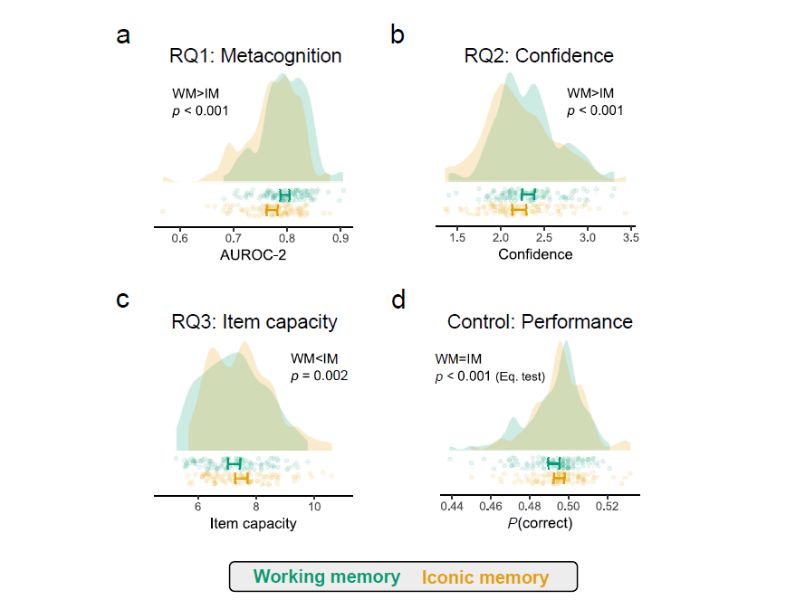
The high capacity of human iconic memory (IM) has been taken as evidence that visual experience is rich and detailed, as introspection suggests. Opponents to this view argue instead that this impression is illusory, with conscious access being mostly limited to what we can attend to. To provide evidence of either view, in this registered report we compared metacognitive sensitivity levels between IM and working memory (WM) representations. The rationale was that, if pre-attentive IM information is as consciously accessible as attention-bounded WM information, metacognitive sensitivity should be comparable across the two memory systems. Replicating classic findings, our results showed that IM capacity exceeded WM capacity. Nevertheless, and despite matched performance, metacognitive sensitivity was higher in WM. We further examined whether reduced metacognition in IM could be explained by inflation—the tendency to overestimate perceptual richness—by comparing confidence levels across the two memory conditions. Pre-registered analyses showed no evidence of inflation, as IM was associated with lower confidence. Our findings suggest that IM supports identification with less consciously accessible information than WM, challenging rich-view interpretations of conscious perception.
Background Respiratory syncytial virus (RSV) is a major cause of hospitalizations and mortality in young infants worldwide. The RSVpreF maternal immunization (MI) was recently introduced in Argentina. Methods This study assessed the impact of RSVpreF MI on RSV-related acute lower respiratory tract infections (ALRTI) hospitalizations through a hospital-based, multicentre, retrospective surveillance cohort study, and measured vaccine effectiveness (VE) using a nested test-negative case–control study. Data of hospitalized infants under 18 months of age was collected and analysed within seven years from three Argentine tertiary hospitals. VE analysis included ALRTI-hospitalized infants who were born between March 1 and November 9, 2024, were under 6 months of age when tested for RSV, and whose mothers were eligible for prenatal RSV immunization. Expected RSV-ALRTI hospitalizations were compared with observed cases using a Poisson model. We estimated the VE of RSVpreF MI against RSV-ALRTI hospitalizations, paediatric intensive care unit (PICU) admissions, and extended hospital stays by comparing these rates in vaccinated and unvaccinated under 3 and 6 months. Findings A total of 3373 participants were included in the impact analysis, fromof whom 323 were born during the vaccination period and were eligible for the VE analysis. The VE of RSVpreF MI was 80·8% (95% CI: 62·8–90·5%), and 66·1% (95% CI 30·1–83·8) for infants under 3 and 6 months, respectively, adjusted for age, sex, comorbidities, and epidemiological weeks. VE for PICU admission was 87·2% (95% CI 52·6–97·0) and 88·6% (95% CI 62·3–97·1) for extended hospital stays in infants under 6 months. The vaccine reduced RSV-ALRTI hospitalizations in infants under 6 months by 33·6% (95% CI 29·5–37·2) in 2024 compared to expected cases from previous years. The number needed to immunize to prevent one RSV-related hospitalization was 83·9 (95% CI 65·9–185·4). Interpretation RSVpreF MI significantly reduced RSV-ALRTI hospitalizations, averting one-third of such hospitalizations in infants under 6 months. These findings provide valuable evidence for policymakers and health authorities.
When updating beliefs, humans tend to integrate more desirable information than undesirable information. In stable environments (low uncertainty and high predictability), this asymmetry favors motivation towards action and perceived self-efficacy. However, in changing environments (high uncertainty and low predictability), this process can lead to risk underestimation and increase unwanted costs. Here, we examine how people (n = 388) integrate threatening information during an abrupt environmental change (mandatory quarantine during the COVID-19 pandemic). Given that anxiety levels are associated with the magnitude of the updating belief asymmetry; we explore its relationship during this particular context. We report a significant reduction in asymmetrical belief updating during a large environmental change as individuals integrated desirable and undesirable information to the same extent. Moreover, this result was supported by computational modeling of the belief update task. However, we found that the reduction in asymmetrical belief updating was not homogeneous among people with different levels of Trait-anxiety. Individuals with higher levels of Trait-anxiety maintained a valence-dependent updating, as it occurs in stable environments. On the other hand, updating behavior was not associated with acute anxiety (State-Anxiety), health concerns (Health-Anxiety), or having positive expectations (Trait-Optimism). These results suggest that highly uncertain environments can generate adaptive changes in information integration. At the same time, it reveals the vulnerabilities of individuals with higher levels of anxiety to adapt the way they learn.
The ability to assess one’s own cognitive processes across different domains is known as metacognition. Although it has been hypothesized that people with certain personality disorders have trouble understanding their own mental states, its relationship with metacognition remains unclear. In an online study, 224 adult participants (average age = 27.45; 63 males & 161 females) from the general population completed the Personality Inventory Disorders 5 (PID-5) for DSM-5 after completing a dot-density perceptual task. Participants reported their confidence levels on each trial. Using a bias-free metacognitive measure, we conducted several regression models to explore the relationship between metacognitive sensitivity and confidence with dysfunctional personality traits. We found evidence that Grandiosity, Perceptual Dysregulation, Restricted Affectivity, Separation Insecurity, Hostility, Impulsivity and Submissiveness dysfunctional personality facets are associated with confidence level. Moreover, Anxiousness and Emotional Lability showed connections with metacognitive sensitivity. These results support the idea of a potential link between metacognition and mental health in the context of a transdiagnostic framework for personality disorders.
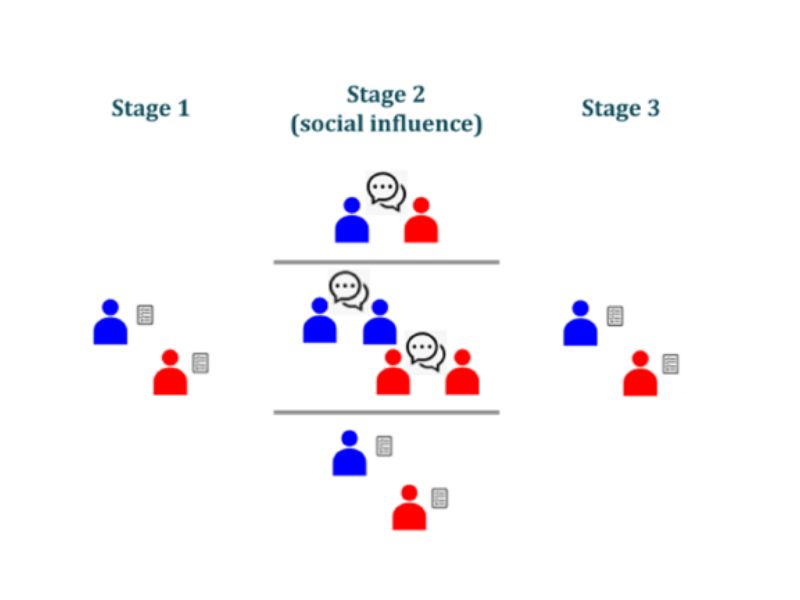
The discourse of political leaders often contains false information that can misguide the public. Fact-checking agencies around the world try to reduce the negative influence of politicians by verifying their words. However, these agencies face a problem of scalability and require innovative solutions to deal with their growing amount of work. While the previous studies have shown that crowdsourcing is a promising approach to fact-check news in a scalable manner, it remains unclear whether crowdsourced judgements are useful to verify the speech of politicians. This article fills that gap by studying the effect of social influence on the accuracy of collective judgements about the veracity of political speech. In this work, we performed two experiments (Study 1: N = 180; Study 2: N = 240) where participants judged the veracity of 20 politically balanced phrases. Then, they were exposed to social information from politically homogeneous or heterogeneous participants. Finally, they provided revised individual judgements. We found that only heterogeneous social influence increased the accuracy of participants compared to a control condition. Overall, our results uncover the effect of social influence on the accuracy of collective judgements about the veracity of political speech and show how interactive crowdsourcing strategies can help fact-checking agencies.
Confidence in perceptual decisions is thought to reflect the probability of being correct. According to this view, confidence should be unaffected or minimally reduced by the presence of irrelevant alternatives. To test this prediction, we designed five experiments. In Experiment 1, participants had to identify the largest geometrical shape among two or three alternatives. In the three-alternative condition, one of the shapes was much smaller than the other two, being a clearly incorrect option. Counter-intuitively, confidence was higher when the irrelevant alternative was present, evidencing that confidence construction is more complex than previously thought. Four computational models were tested, only one of them accounting for the results. This model predicts that confidence increases monotonically with the number of irrelevant alternatives, a prediction we tested in Experiment 2. In Experiment 3, we evaluated whether this effect replicated in a categorical task, but we did not find supporting evidence. Experiments 4 and 5 allowed us to discard stimuli presentation time as a factor driving the effect. Our findings suggest that confidence models cannot ignore the effect of multiple, possibly irrelevant alternatives to build a thorough understanding of confidence.
Metacognition —the human ability to recognize correct decisions— is a key cognitive process linked to learning and development. Several recent studies investigated the relationship between metacognition and autism. However, the evidence is still inconsistent. While some studies reported autistic people having lower levels of metacognitive sensitivity, others did not. Leveraging the fact that autistic traits are present in the general population, our study investigated the relationship between visual metacognition and autistic traits in a sample of 360 neurotypical participants. We measured metacognition as the correspondence between confidence and accuracy in a visual two alternative forced choice task. Autistic-traits were assessed through the Autism-spectrum Quotient (AQ) score. A regression analysis revealed no statistically significant association between autistic traits and metacognition or confidence. Furthermore, we found no link between AQ sub-scales and metacognition. We do not find support for the hypothesis that autistic traits are associated with metacognition in the general population.
Misinformation harms society by affecting citizens’ beliefs and behaviour. Recent research has shown that partisanship and cognitive reflection (i.e. engaging in analytical thinking) play key roles in the acceptance of misinformation. However, the relative importance of these factors remains a topic of ongoing debate. In this registered study, we tested four hypotheses on the relationship between each factor and the belief in statements made by Argentine politicians. Participants (N = 1353) classified fact-checked political statements as true or false, completed a cognitive reflection test, and reported their voting preferences. Using Signal Detection Theory and Bayesian modeling, we found a reliable positive association between political concordance and overall belief in a statement (median = 0.663, CI95 = [0.640, 0.685]), a reliable positive association between cognitive reflection and scepticism (median = 0.039, CI95 = [0.006, 0.072]), a positive but unreliable association between cognitive reflection and truth discernment (median = 0.016, CI95 = [− 0.015, 0.046]) and a positive but unreliable association between cognitive reflection and partisan bias (median = 0.016, CI95 = [− 0.006, 0.037]). Our results highlight the need to further investigate the relationship between cognitive reflection and partisanship in different contexts and formats.
Finding objects is essential for almost any daily-life visual task. Saliency models have been useful to predict fixation locations in natural images during a free-exploring task. However, it is still challenging to predict the sequence of fixations during visual search. Bayesian observer models are particularly suited for this task because they represent visual search as an active sampling process. Nevertheless, how they adapt to natural images remains largely unexplored. Here, we propose a unified Bayesian model for visual search guided by saliency maps as prior information. We validated our model with a visual search experiment in natural scenes. We showed that, although state-of-the-art saliency models performed well in predicting the first two fixations in a visual search task ( 90% of the performance achieved by humans), their performance degraded to chance afterward. Therefore, saliency maps alone could model bottom-up first impressions but they were not enough to explain scanpaths when top-down task information was critical. In contrast, our model led to human-like performance and scanpaths as revealed by: first, the agreement between targets found by the model and the humans on a trial-by-trial basis; and second, the scanpath similarity between the model and the humans, that makes the behavior of the model indistinguishable from that of humans. Altogether, the combination of deep neural networks based saliency models for image processing and a Bayesian framework for scanpath integration probes to be a powerful and flexible approach to model human behavior in natural scenarios.
Online experiments allow for fast, massive, cost-efficient data collection. However, uncontrolled conditions in online experiments can be problematic, particularly when inferences hinge on response-times (RTs) in the millisecond range. To address this challenge, we developed a mobile-friendly open-source application using R-Shiny, a popular R package. In particular, we aimed to replicate the numerical distance effect, a well-established cognitive phenomenon. In the task, 169 participants (109 with a mobile device, 60 on a desktop computer) completed 116 trials displaying two-digit target numbers and decided whether they were larger or smaller than a fixed standard number. Sessions lasted ~7-minutes. Using generalized linear mixed models estimated with Bayesian inference methods, we observed a numerical distance effect: RTs decreased with the logarithm of the absolute difference between the target and the standard. Our results support the use of R-Shiny for RT-data collection. Furthermore, our method allowed us to measure systematic shifts in recorded RTs related to different OSs, web browsers, and devices, with mobile devices inducing longer shifts than desktop devices. Our work shows that precise RT measures can be reliably obtained online across mobile and desktop devices. It further paves the ground for the design of simple experimental tasks using R, a widely popular programming framework among cognitive scientists.
Background: The high COVID-19 dissemination rate demands active surveillance to identify asymptomatic, presymptomatic, and oligosymptomatic (APO) SARS-CoV-2-infected individuals. This is of special importance in communities inhabiting closed or semi-closed institutions such as residential care homes, prisons, neuropsychiatric hospitals, etc., where risk people are in close contact. Thus, a pooling approach—where samples are mixed and tested as single pools—is an attractive strategy to rapidly detect APO-infected in these epidemiological scenarios.
Materials and Methods: This study was done at different pandemic periods between May 28 and August 31 2020 in 153 closed or semi-closed institutions in the Province of Buenos Aires (Argentina). We setup pooling strategy in two stages: first a pool-testing followed by selective individual-testing according to pool results. Samples included in negative pools were presumed as negative, while samples from positive pools were re-tested individually for positives identification.
Results: Sensitivity in 5-sample or 10-sample pools was adequate since only 2 Ct values were increased with regard to single tests on average. Concordance between 5-sample or 10-sample pools and individual-testing was 100% in the Ct ≤ 36. We tested 4,936 APO clinical samples in 822 pools, requiring 86–50% fewer tests in low-to-moderate prevalence settings compared to individual testing.
Conclusions: By this strategy we detected three COVID-19 outbreaks at early stages in these institutions, helping to their containment and increasing the likelihood of saving lives in such places where risk groups are concentrated.
With the arrival of the pandemic in Argentina in March 2020, a working group of scientists from two institutes belonging to the Faculty of Exact and Natural Sciences of the University of Buenos Aires and CONICET, together with colleagues from different academic institutions in the country, decided to put forth our experience and knowledge in data science and associated disciplines, towards helping with decision-making in the context of COVID-19. Data analysis within Argentina and other countries, scenario simulation, as well as rapid response projects- mainly in the province of Buenos Aires- were all within the scope of our aim. This review article outlines some of the activities carried out by our team throughout these pandemic months.
Scientific research on consciousness is critical to multiple scientific, clinical, and ethical issues. The growth of the field could also be beneficial to several areas including neurology and mental health research. To achieve this goal, we need to set funding priorities carefully and address problems such as job creation and potential media misrepresentation.
In daily life, in the operating room and in the laboratory, the operational way to assess wakefulness and consciousness is through responsiveness. A number of studies suggest that the awake, conscious state is not the default behavior of an assembly of neurons, but rather a very special state of activity that has to be actively maintained and curated to support its functional properties. Thus responsiveness is a feature that requires active maintenance, such as a homeostatic mechanism to balance excitation and inhibition. In this work we developed a method for monitoring such maintenance processes, focusing on a specific signature of their behavior derived from the theory of dynamical systems: stability analysis of dynamical modes. When such mechanisms are at work, their modes of activity are at marginal stability, neither damped (stable) nor exponentially growing (unstable) but rather hovering in between. We have previously shown that, conversely, under induction of anesthesia those modes become more stable and thus less responsive, then reversed upon emergence to wakefulness. We take advantage of this effect to build a single-trial classifier which detects whether a subject is awake or unconscious achieving high performance. We show that our approach can be developed into a means for intra-operative monitoring of the depth of anesthesia, an application of fundamental importance to modern clinical practice.
Human metacognition, or the capacity to introspect on one’s own mental states, has been mostly characterized through confidence reports in visual tasks. A pressing question is to what extent results from visual studies generalize to other domains. Answering this question allows determining whether metacognition operates through shared, supramodal mechanisms or through idiosyncratic, modality-specific mechanisms. Here, we report three new lines of evidence for decisional and postdecisional mechanisms arguing for the supramodality of metacognition. First, metacognitive efficiency correlated among auditory, tactile, visual, and audiovisual tasks. Second, confidence in an audiovisual task was best modeled using supramodal formats based on integrated representations of auditory and visual signals. Third, confidence in correct responses involved similar electrophysiological markers for visual and audiovisual tasks that are associated with motor preparation preceding the perceptual judgment. We conclude that the supramodality of metacognition relies on supramodal confidence estimates and decisional signals that are shared across sensory modalities.
Practice can enhance of perceptual sensitivity, a well-known phenomenon called perceptual learning. However, the effect of practice on subjective perception has received little attention. We approach this problem from a visual psychophysics and computational modeling perspective. In a sequence of visual search experiments, subjects significantly increased the ability to detect a “trained target”. Before and after training, subjects performed two psychophysical protocols that parametrically vary the visibility of the “trained target”: an attentional blink and a visual masking task. We found that confidence increased after learning only in the attentional blink task. Despite large differences in some observables and task settings, we identify common mechanisms for decision-making and confidence. Specifically, our behavioral results and computational model suggest that perceptual ability is independent of processing time, indicating that changes in early cortical representations are effective, and learning changes decision criteria to convey choice and confidence.
Human peripheral vision appears vivid compared to foveal vision; the subjectively perceived level of detail does not seem to drop abruptly with eccentricity. This compelling impression contrasts with the fact that spatial resolution is substantially lower at the periphery. A similar phenomenon occurs in visual attention, in which subjects usually overestimate their perceptual capacity in the unattended periphery. We have previously shown that at identical eccentricity, low spatial attention is associated with liberal detection biases, which we argue may reflect inflated subjective perceptual qualities. Our computational model suggests that this subjective inflation occurs because under the lack of attention, the trial-by-trial variability of the internal neural response is increased, resulting in more frequent surpassing of a detection criterion. In the current work, we hypothesized that the same mechanism may be at work in peripheral vision. We investigated this possibility in psychophysical experiments in which participants performed a simultaneous detection task at the center and at the periphery. Confirming our hypothesis, we found that participants adopted a conservative criterion at the center and liberal criterion at the periphery. Furthermore, an extension of our model predicts that detection bias will be similar at the center and at the periphery if the periphery stimuli are magnified. A second experiment successfully confirmed this prediction. These results suggest that, although other factors contribute to subjective inflation of visual perception in the periphery, such as top-down filling-in of information, the decision mechanism may be relevant too.
When visual attention is directed away from a stimulus, neural processing is weak and strength and precision of sensory data decreases. From a computational perspective, in such situations observers should give more weight to prior expectations in order to behave optimally during a discrimination task. Here we test a signal detection theoretic model that counter-intuitively predicts subjects will do just the opposite in a discrimination task with two stimuli, one attended and one unattended: when subjects are probed to discriminate the unattended stimulus, they rely less on prior information about the probed stimulus’ identity. The model is in part inspired by recent findings that attention reduces trial-by-trial variability of the neuronal population response and that they use a common criterion for attended and unattended trials. In five different visual discrimination experiments, when attention was directed away from the target stimulus, subjects did not adjust their response bias in reaction to a change in stimulus presentation frequency despite being fully informed and despite the presence of performance feedback and monetary and social incentives. This indicates that subjects did not rely more on the priors under conditions of inattention as would be predicted by a Bayes-optimal observer model. These results inform and constrain future models of Bayesian inference in the human brain.
What aspects of neuronal activity distinguish the conscious from the unconscious brain? This has been a subject of intense interest and debate since the early days of neurophysiology. However, as any practicing anesthesiologist can attest, it is currently not possible to reliably distinguish a conscious state from an unconscious one on the basis of brain activity. Here we approach this problem from the perspective of dynamical systems theory. We argue that the brain, as a dynamical system, is self-regulated at the boundary between stable and unstable regimes, allowing it in particular to maintain high susceptibility to stimuli. To test this hypothesis, we performed stability analysis of high-density electrocorticography recordings covering an entire cerebral hemisphere in monkeys during reversible loss of consciousness. We show that, during loss of consciousness, the number of eigenmodes at the edge of instability decreases smoothly, independently of the type of anesthetic and specific features of brain activity. The eigenmodes drift back toward the unstable line during recovery of consciousness. Furthermore, we show that stability is an emergent phenomenon dependent on the correlations among activity in different cortical regions rather than signals taken in isolation. These findings support the conclusion that dynamics at the edge of instability are essential for maintaining consciousness and provide a novel and principled measure that distinguishes between the conscious and the unconscious brain.
Mounting experimental and theoretical results indicate that neural systems are poised near a critical state. In human subjects, however, most evidence comes from functional MRI studies, an indirect measurement of neuronal activity with poor temporal resolution. Electrocorticography (ECoG) provides a unique window into human brain activity: each electrode records, with high temporal resolution, the activity resulting from the sum of the local field potentials of ∼105 neurons. We show that the human brain ECoG recordings display features of self-regulated dynamical criticality: dynamical modes of activation drift around the critical stability threshold, moving in and out of the unstable region and equilibrating the global dynamical state at a very fast time scale. Moreover, the analysis also reveals differences between the resting state and a motor task, associated with increased stability of a fraction of the dynamical modes.
Mean field models are often useful approximations to biological systems, but sometimes, they can yield misleading results. In this work, we compare mean field approaches with stochastic models of intracellular calcium release. In particular, we concentrate on calcium signals generated by the concerted opening of several clustered channels (calcium puffs). To this end we simulate calcium puffs numerically and then try to reproduce features of the resulting calcium distribution using mean field models were all the channels open and close simultaneously. We show that an unrealistic non-linear relationship between the current and the number of open channels is needed to reproduce the simulated puffs. Furthermore, a single channel current which is five times smaller than the one of the stochastic simulations is also needed. Our study sheds light on the importance of the stochastic kinetics of the calcium release channel activity to estimate the release fluxes.
We determine the calcium fluxes through inositol 1,4,5-trisphosphate receptor/channels underlying calcium puffs of Xenopus laevis oocytes using a simplified version of the algorithm of Ventura et al. [1]. An analysis of 130 puffs obtained with Fluo-4 indicates that Ca2+ release comes from a region of width ∼450 nm, that the release duration is peaked around 18 ms and that the underlying Ca2+ currents range between 0.12 and 0.95 pA. All these parameters are independent of IP3 concentration. We explore what distributions of channels that open during a puff, Np, and what relations between current and number of open channels, I(Np), are compatible with our findings and with the distribution of puff-to-trigger amplitude ratio reported in Rose et al. [2]. To this end, we use simple “mean field” models in which all channels open and close simultaneously. We find that the variability among clusters plays an important role in shaping the observed puff amplitude distribution and that a model for which I(Np) ∼ Np for small Np and (α > 1) for large Np, provides the best agreement. Simulations of more detailed models in which channels open and close stochastically show that this nonlinear behavior can be attributed to the limited time resolution of the observations and to the averaging procedure that is implicit in the mean-field models. These conclusions are also compatible with observations of ∼400 puffs obtained using the dye Oregon green.
Calcium signals are involved in a large variety of physiological processes. Their versatility relies on the diversity of spatio-temporal behaviors that the calcium concentration can display. Calcium entry through inositol 1,4,5-trisphosphate (IP) receptors (IPR’s) is a key component that participates in both local signals such as “puffs” and in global waves. IPR’s are usually organized in clusters on the membrane of the endoplasmic reticulum and their spatial distribution has important effects on the resulting signal. Recent high resolution observations [1] of Ca puffs offer a window to study intra-cluster organization. The experiments give the distribution of the number of IPR’s that open during each puff without much processing. Here we present a simple model with which we interpret the experimental distribution in terms of two stochastic processes: IP binding and unbinding and Ca-mediated inter-channel coupling. Depending on the parameters of the system, the distribution may be dominated by one or the other process. The transition between both extreme cases is similar to a percolation process. We show how, from an analysis of the experimental distribution, information can be obtained on the relative weight of the two processes. The largest distance over which Ca-mediated coupling acts and the density of IP-bound IPR’s of the cluster can also be estimated. The approach allows us to infer properties of the interactions among the channels of the cluster from statistical information on their emergent collective behavior.
Calcium signals participate in a large variety of physiological processes. In many instances, they involve calcium entry through inositol 1,4,5-trisphosphate (IP3) receptors (IP3Rs), which are usually organized in clusters. Recent high-resolution optical experiments by Smith & Parker have provided new information on Ca2+ release from clustered IP3Rs. In the present paper, we use the model recently introduced by Solovey & Ponce Dawson to determine how the distribution of the number of IP3Rs that become open during a localized release event may change by the presence of Ca2+ buffers, substances that react with Ca2+, altering its concentration and transport properties. We then discuss how buffer properties could be extracted from the observation of local signals.
Calcium release from intracellular stores plays a key role in the regulation of a variety of cellular activities. In various cell types this release occurs through inositol-triphosphate (IP3) receptors which are Ca2+ channels whose open probability is modulated by the cytosolic Ca2+ concentration itself. Thus, the combination of Ca2+ release and Ca2+ diffusion evokes a variety of Ca2+ signals depending on the number and relative location of the channels that participate of them. In fact, a hierarchy of Ca2+ signals has been observed in Xenopus laevis oocytes, ranging from very localized events (puffs and blips) to waves that propagate throughout the cell. In this cell type channels are organized in clusters. The behavior of individual channels within a cluster cannot be resolved with current optical techniques. Therefore, a combination of experiments and mathematical modeling is unavoidable to understand these signals. However, the numerical simulation of a detailed mathematical model of the problem is very hard given the large range of spatial and temporal scales that must be covered. In this paper we present an alternative model in which the cluster region is modeled using a relatively fine grid but where several approximations are made to compute the cytosolic Ca2+ concentration ([Ca2+]) distribution. The inner-cluster [Ca2+] distribution is used to determine the openings and closings of the channels of the cluster. The spatiotemporal [Ca2+] distribution outside the cluster is determined using a coarser grid in which each (active) cluster is represented by a point source whose current is proportional to the number of open channels determined before. A full reaction-diffusion system is solved on this coarser grid.
In the present work we generalize the dielectric breakdown model to describe dielectric breakdown patterns in both conductor-loaded and insulator-loaded composites. The present model is an extension of a previous one [F. Peruani et al., Phys. Rev. E 67, 066121 (2003)] presented by the authors to describe dielectric breakdown patterns in conductor-loaded composites. Particles are distributed at random in a matrix with a variable concentration p. The generalized model assigns different probabilities 𝑃(𝑖, → 𝑘 𝑖′,𝑘′) to breakdown channel formation according to particle characteristics. Dielectric breakdown patterns are characterized by their fractal dimension D and the parameters of the Weibull distribution. Studies are carried out as a function of the fraction of inhomogeneities, p.
Recently, a cellular automata model has been introduced (Phys. Rev. Lett. 87 (2001) 168102) to describe the spread of the HIV infection among target cells in lymphoid tissues. The model reproduces qualitatively the entire course of the infection displaying, in particular, the two time scales that characterize its dynamics. In this work, we investigate the robustness of the model against changes in three of its parameters. Two of them are related to the resistance of the cells to get infected. The other one describes the time interval necessary to mount specific immune responses. We have observed that an increase of the cell resistance, at any stage of the infection, leads to a reduction of the latency period, i.e., of the time interval between the primary infection and the onset of AIDS. However, during the early stages of the infection, when the cell resistance increase is combined with an increase in the initial concentration of infected cells, the original behavior is recovered. Therefore we find a long and a short latency regime (eight and one year long, respectively) depending on the value of the cell resistance. We have obtained, on the other hand, that changes on the parameter that describes the immune system time lag affects the time interval during which the primary infection occurs. Using different extended versions of the model, we also discuss how the two-time scale dynamics is affected when we include inhomogeneities on the cells properties, as for instance, on the cell resistance or on the time interval to mount specific immune responses.
This paper addresses the problem of dielectric breakdown in composite materials. The dielectric breakdown model was generalized to describe dielectric breakdown patterns in conductor-loaded composites. Conducting particles are distributed at random in the insulating matrix, and the dielectric breakdown propagates according to new rules to take into account electrical properties and particle size. Dielectric breakdown patterns are characterized by their fractal dimension D and the parameters of the Weibull distribution. Studies are carried out as a function of the fraction of conducting inhomogeneities, p. The fractal dimension D of electrical trees approaches the fractal dimension of a percolation cluster when the fraction of conducting particles approximates the percolation limit.
We studied the motion of a variable mass oscillator. The mass used is a container full of sand that loses sand at a constant rate and hangs from a spring. The spring was suspended from a force sensor connected to a data acquisition system that let us study the evolution of the system. In the underdamped regime we identified three distinct types of behavior for the system, depending on the relation between the energy loss due to the exit of mass and the energy loss through friction. The experimental results are well described by both the numerical solution to the equations of motion and our model, which makes it simple to predict the different types of behavior and to assess the relevant physical parameters involved in the dynamics of this system.
We discuss a simple and inexpensive apparatus that lets us measure the instantaneous flow rate of granular media, such as sand, in real time. The measurements allow us to elucidate the phenomenological laws that govern the flow of granular media through an aperture. We use this apparatus to construct a variable mass system and study the motion of an Atwood machine with one weight changing in time in a controlled manner. The study illustrates Newton’s second law for variable mass systems and lets us investigate the dependence of the flow rate on acceleration.